

Experimental Coffee Processing Methods Explained
Table of Contents
- What Experimental Coffee Processing Actually Means
- The Traditional Baseline: Washed, Natural and Honey
- Coffee Fermentation Methods: Aerobic vs Anaerobic
- Anaerobic Coffee Processing: Sealed Tanks and Controlled Variables
- Carbonic Maceration Coffee: Borrowed From Winemaking
- Yeast Inoculation and Other Experimental Techniques
- Risks, Defects and How Quality Is Controlled
- How to Brew Experimental Coffee Beans at Home
- Frequently Asked Questions
Last Updated: October 21, 2026
What Experimental Coffee Processing Actually Means
Experimental coffee processing is the deliberate manipulation of fermentation and drying variables, oxygen exposure, temperature, tank pressure and microbial inoculation, to produce flavor profiles that conventional washed, natural and honey methods rarely achieve.
The category has moved fast.
Below, we break down each method, the variables producers control, the defects that ruin batches, and how to brew the results at home. But first, what most guides get wrong: they describe these methods as recipes when they are really environments.
The Traditional Baseline: Washed, Natural and Honey
Every experimental method is a variation on three conventional approaches, so the baseline comes first.
Washed (Wet) Processing
Washed processing removes the cherry pulp and mucilage before drying, leaving a clean bean dried on patios or raised beds. The cup reads varietal and origin first: clarity, defined acidity, less fruit.
Natural (Dry) Processing
Natural processing dries the whole cherry around the bean, letting the fruit ferment in contact with the seed. Expect heavier body, sweeter fruit notes and more complexity, plus a higher risk of uneven drying and off-flavors if the cherry is not turned and sorted carefully. Dyverse's Ethiopia Natural, a full natural from smallholder farms in the Sidama zone dried on raised beds, shows the style at its cleanest: milk chocolate, fruit and caramel.

Honey and Pulped Natural
Honey processing sits between the two. Producers depulp the cherry but leave some mucilage on the bean during drying, and the amount left behind (white, yellow, red, black honey) sets how much sweetness and body develop. Pulped natural is the same idea under a different regional name.
| Method | Pulp and Mucilage | Typical Cup | Main Risk |
|---|---|---|---|
| Washed | Both removed | Clean, bright, varietal | Little process character |
| Natural | Both retained | Fruity, heavy body | Uneven drying, off-flavors |
| Honey | Pulp removed, mucilage partly kept | Sweet, rounded | Sticky mucilage, mold |
| Anaerobic | Sealed tank, then dried | Intense, fermented, complex | Over-fermentation |
Coffee Fermentation Methods: Aerobic vs Anaerobic
The core distinction in coffee fermentation methods is oxygen. Aerobic fermentation happens in open tanks or on beds where oxygen is available; anaerobic fermentation happens in sealed tanks where oxygen is limited or absent.
Aerobic fermentations tend to develop cleaner, brighter acidity and are often used as a pre-fermentation step before drying.
Practical controls matter more than the label. Producers monitor Brix level (sugar concentration in the mosto, the juice surrounding the beans), temperature and time, and taste through the tank rather than trusting a clock.
Anaerobic Coffee Processing: Sealed Tanks and Controlled Variables
Anaerobic coffee processing ferments depulped or whole cherries inside a sealed tank, often with a one-way valve that lets gas escape while keeping oxygen out.
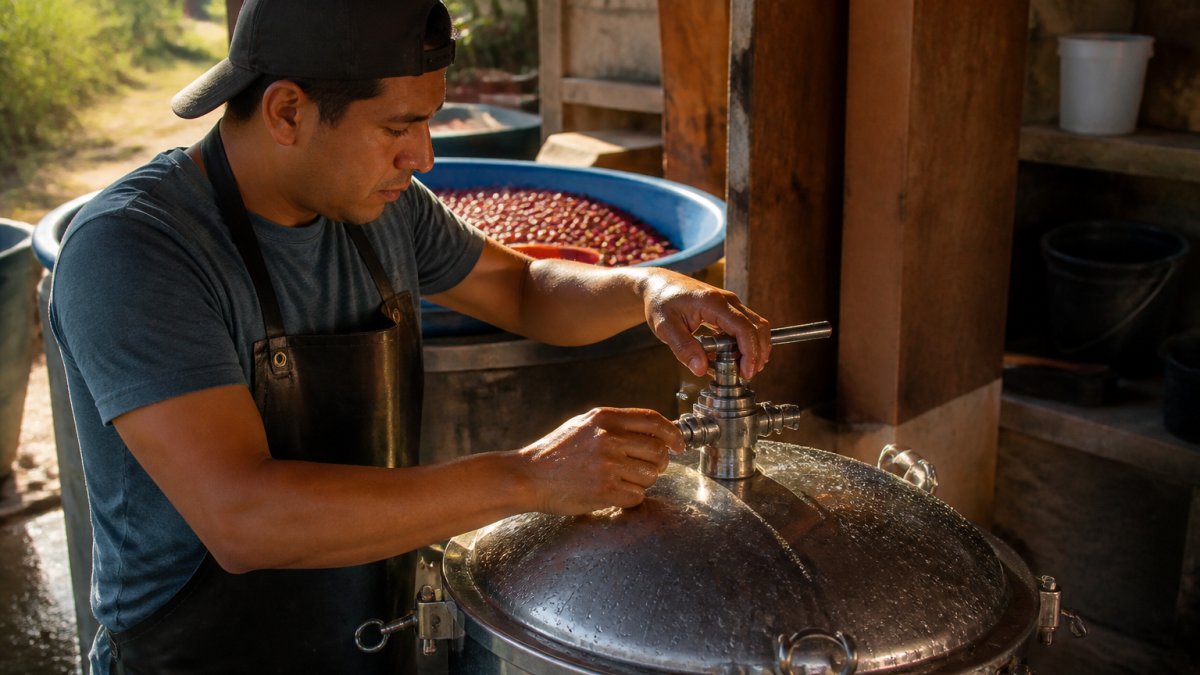
The variables that decide the outcome:
- Cherry selection: ripe, sorted cherry ferments predictably; underripe or damaged fruit introduces defects.
- Temperature: cooler tanks slow fermentation and preserve clarity; warm tanks accelerate it and risk runaway batches.
- Time: tracked in hours and adjusted to Brix readings, not fixed in advance.
- Pressure: some producers use sealed vessels that build carbon dioxide pressure, which affects how the bean absorbs compounds.
- Post-fermentation drying: slow, even drying locks in the profile; rushed drying muddies it.
The cup usually shows intense fruit, spice or spirit-like notes with a syrupy body.
Carbonic Maceration Coffee: Borrowed From Winemaking
Carbonic maceration coffee adapts a winemaking technique: whole, intact cherries go into a sealed tank flooded with carbon dioxide, creating an oxygen-free environment before fermentation and drying.
The distinction from plain anaerobic processing is the gas and the fruit condition.
The variables a producer actually manages:
- Fruit condition: whole, intact, sorted cherry is the norm; damaged or underripe fruit ferments unpredictably.
- Gas environment: CO2 is introduced to displace oxygen, and the tank is kept sealed; some producers use a one-way valve to vent excess pressure.
- Temperature: cooler tanks slow fermentation and preserve clarity; warm tanks accelerate it and risk runaway batches.
- Time: tracked in hours and adjusted to Brix and pH readings rather than fixed in advance.
- Pressure: sealed vessels build CO2 pressure, which affects how the bean absorbs compounds; producers decide how much pressure to allow before venting.
- Post-fermentation drying: slow, even drying locks in the profile; rushed drying muddies it.
The cup usually shows pronounced red-fruit and floral character with a rounder acidity than a standard anaerobic lot, sometimes with a syrupy body.
For buyers, "carbonic" on a label signals a specific gas environment, not a specific flavor.
Yeast Inoculation and Other Experimental Techniques
Yeast inoculation adds a selected commercial or native yeast culture to the fermentation tank to steer the microbial population and push a targeted flavor outcome.
Coffee fermentation is driven by a mix of yeasts, bacteria and other microbes naturally present on the cherry and in the mill environment.
What the cup shows depends heavily on the culture and conditions. Some inoculated lots read cleaner and more consistent than uninoculated fermentations; others push specific fruit or spice notes.
Other techniques producers are testing include:
- Lactic and acetic fermentation: encouraging specific acid profiles through temperature and oxygen control, with the aim of shifting the cup toward either rounder or sharper acidity.
- Double fermentation: running a second fermentation after an initial anaerobic phase, which can deepen intensity but also raises defect risk.
- Barrel and fruit co-fermentation: fermenting beans alongside fruit or in spirit barrels to add aroma, a technique that layers external character onto the bean rather than relying on the bean's own fermentation.
The whiskey barrel approach shows how far the category has moved. Dyverse's Whiskey Barrel Aged coffee is a single-origin Guatemalan aged 30 days in a bourbon barrel and roasted to order, layering barrel character onto the bean rather than fermenting it.

Inoculation and co-fermentation carry the highest defect risk in the whole category.
Risks, Defects and How Quality Is Controlled
Quality control in experimental processing rests on three things: measuring the fermentation, controlling the dry, and tasting at every stage. Skip any and the batch fails, usually expensively.
The defects to know:
- Over-fermentation: vinegar, solvent or medicinal notes from fermentation running past its window.
- Mold and phenol: caused by poor tank hygiene or wet, slow drying.
- Uneven batches: some beans ferment further than others, producing a cup that tastes muddled.
- Stalled fermentation: cold tanks or weak microbial activity leave the profile flat.
Control measures are unglamorous but effective: sanitize tanks between lots, sort cherry before it enters the tank, log temperature and Brix at intervals, and dry slowly on raised beds with regular turning.
The economics explain the discipline. Experimental lots demand more labor, more tank time and more risk, and producers price them accordingly. For a buyer, the premium pays for that risk and for the record-keeping that makes a consistent product possible.
How to Brew Experimental Coffee Beans at Home
Experimental beans reward a gentler approach than you might expect. The intense fermentation character is already in the bean, so extract it evenly rather than amplifying it.
A workflow that works well:
- Rest the beans 7 to 14 days after roast so degassing settles.
- Grind medium and brew a small test cup before committing a full batch.
- Lower the water temperature if the cup tastes sharp or boozy.
- Shorten brew time if you taste solvent or vinegar notes.
- Increase dose slightly if the cup tastes thin or hollow.
Heavy fermentation character can overpower delicate brewing methods. Dyverse's Robusta, a medium-roasted West Java bean with cacao, Brazil nut and malt notes, is an approachable reference for calibrating your grinder.

For sourcing, look for roasters who publish the process, farm and fermentation details on the bag.
Frequently Asked Questions
What is experimental coffee processing?
Experimental coffee processing covers methods that go beyond the traditional washed, natural and honey routes. Producers use sealed tanks, controlled temperatures, measured sugar levels (Brix) and sometimes cultured yeasts to steer fermentation before drying. The aim is to shape sweetness, acidity and aroma in ways standard processing cannot. It is not a single technique but a family of approaches, including anaerobic coffee processing, carbonic maceration coffee and yeast inoculation, each with its own variables and risks.
How does coffee processing affect flavor?
Processing decides how much fruit material stays in contact with the bean and how fermentation unfolds, which shapes sweetness, acidity, body and aroma. Washed coffees usually taste cleaner and brighter because the mucilage is removed early. Naturals keep the cherry on the bean during drying, pushing fruit and body forward. Experimental coffee processing methods add another layer by controlling oxygen, temperature and time, which can produce deeper sweetness and layered aromatics, though results depend heavily on cherry selection and drying discipline.
What is anaerobic fermentation in coffee?
Anaerobic fermentation means coffee cherries or depulped beans ferment in a sealed tank with little or no oxygen. Producers track time, temperature and Brix level, and often use a one-way valve to release gas. The low-oxygen environment favors different microorganisms than open fermentation, which can build complexity and sweetness. It is one of the most common coffee fermentation methods in specialty lots today, but it needs tight controls, because over-fermentation quickly produces vinegary or boozy defects.
What is carbonic maceration coffee processing?
Carbonic maceration coffee borrows a winemaking technique: whole cherries go into a sealed tank that is flushed with carbon dioxide, creating an oxygen-free environment. Pressure and gas push fermentation in a different direction than standard anaerobic tanks. The result is often described as juicy and wine-like, with strong fruit aromatics. It sits at the more experimental end of anaerobic coffee processing and demands careful monitoring of pressure, temperature and time to avoid off-flavors.
How is honey-processed coffee different from washed coffee?
Honey processing, also called pulped natural, removes the skin and pulp but leaves some mucilage on the bean during drying. Washed coffee removes the mucilage entirely after depulping. That difference shows in the cup: washed coffees tend to be cleaner and more acidic, while honey lots land in between, with more sweetness and body than washed but less fruit intensity than a full natural. Drying on raised beds and turning frequency matter a lot for honey lots.
Does fermentation make coffee taste fruity?
Fermentation can push fruit notes forward, but it is not a guarantee. Fruitiness comes from a mix of variety, cherry ripeness, microorganism activity and drying. A clean natural Ethiopia lot tastes fruity because the cherry stayed on the bean, not because of a sealed tank. Experimental coffee processing methods can amplify or reshape aromatics, but poorly controlled fermentation more often produces defects like vinegar, acetone or medicinal notes than pleasant fruit.
How can you brew coffee made with experimental processing methods?
Start with a medium grind and water around 92-94C, then adjust. Heavily fermented lots can taste muddy at high extraction, so try a slightly coarser grind and shorter contact time first. A 1:16 ratio is a safe starting point. If the cup tastes boozy or overpowering, dilute slightly or lower the water temperature. Learning how to brew experimental coffee beans is mostly about small, repeatable changes, and keeping notes so you can compare brews.