

How to Identify Fresh Roasted Coffee: 7 Signs to Check
Table of Contents
- Why Fresh Roasted Coffee Tastes Different
- Start With the Coffee Roast Date on the Bag
- How Long Coffee Beans Stay Fresh After Roasting
- What Fresh Coffee Beans Smell Like
- Signs of Stale Coffee Beans to Watch For
- How to Tell Freshness Apart From Roast Level
- A Simple Freshness Checklist for Buying Coffee
- Conclusion
- Frequently Asked Questions
Last Updated: October 9, 2026
Why Fresh Roasted Coffee Tastes Different
Fresh roasted coffee still holds the aromatic oils and carbon dioxide that create sweetness, acidity, and body.
At Dyverse, we ship every order straight from our craft roaster, eliminating middlemen to maintain the highest quality.
Why does timing matter? Roasting forces hundreds of volatile aromatic compounds to the bean's surface, and they escape into the air over time.
Identifying fresh roasted coffee comes down to a few reliable signals.
Start With the Coffee Roast Date on the Bag
The roast date is the most useful number on any coffee bag: the exact day the beans left the roaster, and the only honest starting point for judging freshness.
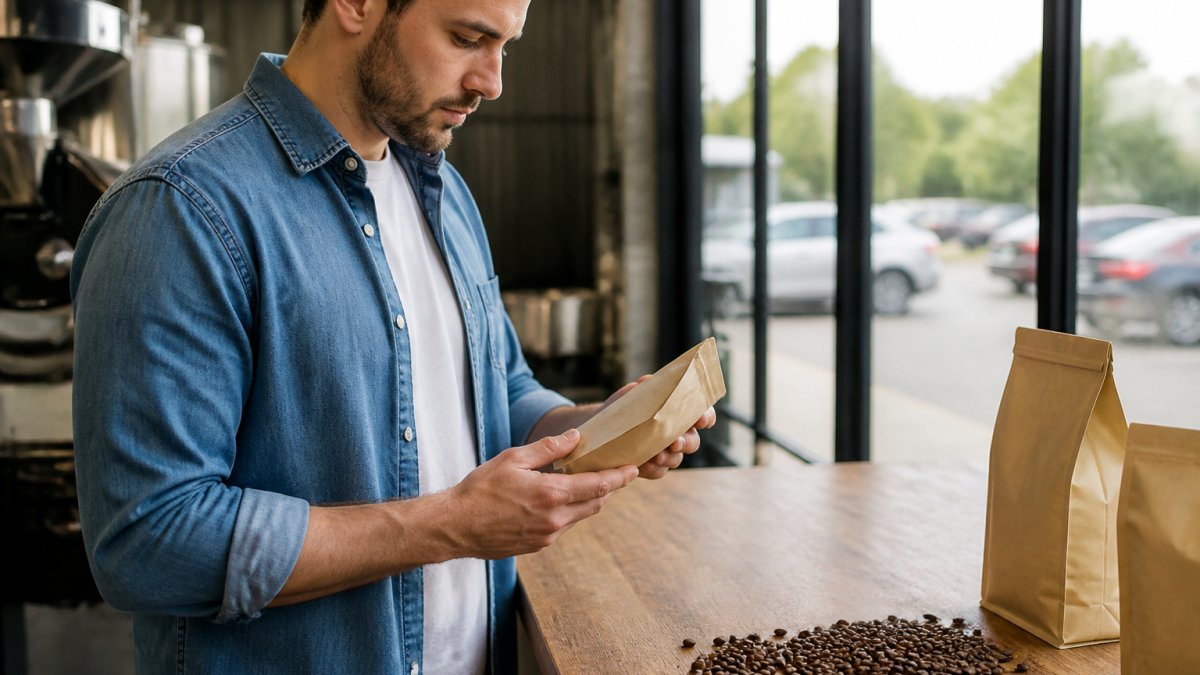
Most specialty roasters print it as a simple day and month stamp. According to guidance on coffee labeling from the Specialty Coffee Association, roast date is the standard freshness reference the industry uses.
Roast Date vs Expiration Date
A roast date tells you when the clock started. An expiration date tells you when the seller wants you to stop using it.
The gap between them can be wide: a bag stamped with a one-year expiration may have sat on a shelf for months.
Rule of thumb: if a bag only shows a best-by date, subtract the roaster's typical freshness window to estimate the roast date.
What the Packaging Can and Cannot Prove
A roast date is only as trustworthy as its packaging. Inspect this before you buy:
- One-way valve. A valve lets carbon dioxide escape without letting oxygen in. It signals the roaster expects beans to degas, but does not prove freshness.
- Sealed seams. A soft or loose bag lets oxygen in and aroma out.
- Opaque or foil-lined material. Light and heat accelerate staling, so clear bags on a sunny shelf age faster than opaque ones in a cool cupboard.
Packaging can slow the clock, not reset it. A beautifully sealed bag with a six-month-old roast date is still six-month-old coffee.
What to Do When No Roast Date Is Printed
No roast date is a red flag, not a dealbreaker. How to work around it:
- Check the bottom and back of the bag, where stamps hide
- Look for a batch or lot code to ask the roaster about
- Buy from sellers who publish roast dates online
- Ask when the current batch arrived and how often they restock
Our own orders always ship with a visible roast date.
How Long Coffee Beans Stay Fresh After Roasting
Whole beans stay at their best for roughly two to four weeks after roasting, peaking around five to twenty days. After that, flavor drops off gradually, not all at once.
Freshness is not a switch but a slow curve, and where you land on it changes what you should do with the beans.
Older beans are not useless, just better suited to certain brew methods.
The Ideal Brewing Window
The ideal brewing window for most beans is five to twenty days after roasting, when carbon dioxide has mostly escaped and the aromatic oils are still intact.
Brew too early and the beans fight you; too late and the cup tastes hollow. Give a fresh bag a few days to rest before your first serious pour.
What Fresh Coffee Beans Smell Like
Fresh coffee beans smell sweet, complex, and alive, with notes that shift by origin and roast. Stale beans smell flat, dusty, or faintly of cardboard.
It is the easiest free test: open the bag and breathe in. If the aroma hits you before your nose is close, that is a good sign.
Whole Beans vs Ground Coffee Aroma
Whole beans hold their aroma far longer than ground coffee, because grinding exposes every aromatic compound to oxygen at once.
That is why a bag of pre-ground coffee can smell wonderful on day one and dull by day ten. Whole beans give you a much longer runway, and they let you grind right before brewing. As noted in research on coffee aroma and oxidation, oxygen exposure is the main driver of aroma loss.
Signs of Stale Coffee Beans to Watch For
Stale coffee beans show clear physical and sensory signs. The most reliable are dull aroma, a matte surface, and flat, lifeless taste.
Run through these checks before you brew:
- No smell on opening. A fresh bag releases aroma immediately.
- Dry, matte surface. Fresh beans have a slight sheen from surface oils.
- No bloom when brewing. Fresh grounds puff up and bubble when hot water hits them.
- Flat, papery taste. Stale coffee loses sweetness and acidity first.
The bloom test is the one we trust most. If your grounds do not swell and bubble, the beans are past their prime.
A Practical Freshness Inspection Sequence
Run these checks in order. Each takes seconds and narrows the diagnosis before you commit to a brew.
- Read the roast date. Within two to four weeks, move on. Missing or older, treat the rest as confirmation.
- Inspect the packaging. Look for a one-way valve, sealed seams, and an opaque or foil-lined bag; a compromised bag stales beans faster than the date suggests.
- Smell the whole beans. Aromatics should hit you before your nose is close. Flat or dusty means the clock has run out.
- Look at the surface. A slight sheen is normal. A dry, matte look often signals age, though very light roasts can look matte when fresh.
- Snap a bean. Fresh beans break with a crisp snap; stale beans crumble or bend.
- Brew a small test batch. Fresh grounds swell and bubble; stale grounds sit flat.
No single sign is definitive: a dark roast can look oily and smell bold while months old, and a light roast can look matte while days off the roaster. The sequence stacks weak signals into a strong conclusion.
A Controlled At-Home Freshness Test
Subjective impressions are easy to fool, especially from memory. A side-by-side test removes most of the guesswork.
- Pick two coffees. One you believe is fresh, one older, ideally at a similar roast level so you compare age, not roast.
- Use the same recipe. Same dose, grind, water temperature, brew method, and water. Change only the coffee.
- Brew both back to back. Taste side by side while warm, then as they cool.
- Score four things. Aroma, sweetness, acidity, and finish. Fresh coffee shows more sweetness and clearer acidity; older coffee tastes flatter and finishes shorter.
- Repeat once. If the same coffee wins twice under the same conditions, you have a reliable read.
It is not a lab test, but it beats smelling a bag and guessing, and it trains your palate for faster, more accurate calls.
How Brewing Method Changes the Read
Freshness cues differ by brew method. Espresso and pour-over highlight aromatic compounds, punishing stale beans hardest and making the bloom test especially informative. Immersion methods like French press and cold brew are more forgiving, so a bean that tastes flat as espresso can still make a pleasant immersion cup. Testing with one method alone may misjudge a bean better suited to another.
How to Tell Freshness Apart From Roast Level
Confusing freshness with roast level is the most common mistake we see.
A dark roast looks oily and smells bold but can be months old; a light roast looks pale and dry yet can be two days off the roaster.
Here is how the categories break down:
| Roast Level | Surface Look | Typical Aroma | Common Misread |
|---|---|---|---|
| Light roast | Dry, matte, pale brown | Fruity, floral, tea-like | Mistaken for underdeveloped |
| Medium roast | Slight sheen, even brown | Balanced, sweet, nutty | Often called "the safe pick" |
| Dark roast | Oily, deep brown to black | Smoky, bold, bittersweet | Mistaken for fresher than it is |
Dark roasts hide staleness better, which is why they trip people up: oils and roasted notes mask the flatness obvious in a light roast.
A Simple Freshness Checklist for Buying Coffee
Use this checklist every time you buy, in person or online. It takes thirty seconds and saves a disappointing bag.
- Roast date is printed and clearly visible
- Roast date is within the last two to four weeks
- Bag has a one-way valve to release gas without letting oxygen in
- Beans are whole, not pre-ground
For storage, keep beans in an airtight container away from light, heat, and moisture.
Brew method also changes how much freshness you taste: espresso and pour-over punish stale beans hardest, while cold brew and French press are forgiving homes for beans a few weeks old.
Conclusion
Finding genuinely fresh beans takes more than trusting a label, and that gap causes most disappointing cups.
Dyverse closes it by partnering directly with a dedicated craft roaster, so every order ships fresh to your doorstep, eliminating middlemen to maintain the highest quality. We source rare varietals from trusted growers, build roast profiles around each origin, and print the roast date so you can verify freshness yourself.
Get started with Dyverse and taste what coffee is supposed to be.
Frequently Asked Questions
How can you tell if coffee beans are freshly roasted?
Check three things in order. First, look for a printed roast date and confirm it falls within the last 3 to 30 days. Second, open the bag and smell the beans: fresh roasted coffee gives off a clear, sweet, complex aroma, while older beans smell flat or papery. Third, squeeze a bean; it should feel firm and dense, not brittle or crumbly. If the bag has a one-way valve, press it gently and smell the air that escapes, which is one of the fastest freshness checks you can do in a store.
How long do coffee beans stay fresh after roasting?
Whole beans hold their peak flavor for roughly 2 to 4 weeks after the roast date when stored in a sealed, opaque container away from heat and light. They stay drinkable for several months but lose sweetness and aroma steadily. Ground coffee ages much faster, often losing noticeable quality within 7 to 14 days, because the increased surface area speeds up oxygen exposure. If you want to know how long coffee beans stay fresh in your own kitchen, track the roast date and taste the coffee weekly to find your personal cutoff.
What are the clearest signs of stale coffee beans?
The most reliable signs of stale coffee beans are a dull, faded smell instead of a sweet aroma, a flat or cardboard-like taste in the cup, and beans that feel light and brittle rather than dense. Surface oils can be misleading, since dark roasts look oily even when fresh. A lack of crema in espresso, a thin body, and a sour or bitter finish with no sweetness are also common clues. If the bag lists no roast date and the aroma is weak, treat the coffee as old.
Does fresh coffee smell different from stale coffee?
Yes, and the gap is easy to notice once you compare them side by side. Fresh coffee beans smell sweet, layered, and slightly fruity or floral depending on origin and roast level. Stale beans smell muted, dusty, or like cardboard and dry cereal. Grinding amplifies the difference: a fresh bean releases a burst of aroma the moment it is ground, while an old bean produces a faint, flat scent. If you are unsure, grind a small amount and smell it immediately, since ground coffee loses its aroma within minutes.