

Best Specialty Coffee Subscription for Beginners 2026
Table of Contents
- What Makes a Specialty Coffee Subscription Beginner-Friendly?
- Single Origin vs Blend Coffee: What Beginners Should Know
- How to Brew Specialty Coffee at Home Without Overthinking It
- How to Store Specialty Coffee Beans for Maximum Freshness
- Cost-Per-Cup Analysis: Is a Specialty Coffee Subscription Worth It?
- Equipment Pairing Guide: Match Your Subscription to Your Brewing Method
- Conclusion: Start Your Specialty Coffee Subscription with Confidence
- Frequently Asked Questions
Last Updated: September 29, 2026
What Makes a Specialty Coffee Subscription Beginner-Friendly?
The best specialty coffee subscription for beginners is one that removes guesswork while still teaching you something with every bag. A beginner-friendly plan does three things: it lets you control how often coffee arrives, it explains each roast in plain language, and it never locks you into a commitment you can't pause.
Customizable Plans and Delivery Frequency
Flexibility is the feature beginners actually use. A subscription that ships every two weeks sounds efficient until you realize you're still working through the last bag.
Look for these controls before you commit:
- Skip, pause, or reschedule any shipment without a phone call
- Choose your delivery frequency, from weekly to every six weeks
- Swap a roast or origin before a box ships
- Adjust grind size to match your brewer
Roast Profiles and Tasting Notes for New Palates
Roast profile refers to how long and how dark a roaster develops the beans, which shapes everything you taste in the cup. A light roast keeps more of the bean's natural acidity and fruit character. A medium roast balances sweetness and body. A dark roast leans smoky and bittersweet, and it's often the easiest starting point for anyone moving over from supermarket coffee.
Single Origin vs Blend Coffee: What Beginners Should Know
Single-origin coffee comes from one growing region, farm, or cooperative, so it tastes like a specific place. A blend combines beans from multiple origins, and roasters build blends for consistency and balance. Neither is "better," but they serve different goals, and for a beginner, the choice is really about what you're trying to learn.
Here's how to think about the choice:
| Factor | Single-Origin | Blend |
|---|---|---|
| Flavor | Distinct, changes by harvest | Consistent, repeatable |
| Best for | Exploring terroir and variety | A dependable daily cup |
| Learning curve | Higher, flavors vary | Lower, predictable |
| Brewing | Rewards attention to grind and ratio | Forgiving across methods |
A Concrete Example of the Difference
A washed Ethiopian single-origin from a Yirgacheffe cooperative typically lands in the cup with floral and citrus notes, jasmine, bergamot, lemon, and a tea-like body. A breakfast blend built from Brazilian and Colombian beans usually tastes like cocoa, toasted nuts, and brown sugar, with a heavier body that stands up to milk. Same brewing method, same grind, wildly different cups.
The Blind-Test Method: How to Actually Learn What You Like
Most guides tell you to "explore" without telling you how. Here's a framework that works, and it's the fastest way to refine your subscription preferences:
- Brew two coffees back-to-back. Same grinder, same ratio, same water temperature. Only the bean changes.
- Label them A and B, don't look at the bag until after you've tasted.
- Score four things on a 1-5 scale: sweetness, acidity, body, and aftertaste. Write them down.
- Note one word for the flavor. "Fruity," "nutty," "chocolatey," "floral", whatever comes to mind first.
- Reveal the bags. Now you know whether you preferred the Ethiopian or the Brazilian, the light roast or the medium.
Which Should You Buy First?
If you're ordering your first bag, start with a medium-roast blend. It's forgiving across brew methods, it tastes familiar enough to finish, and it gives you a baseline. Then, on your second or third shipment, swap in a single-origin from a region you've never tried, Ethiopia, Kenya, Guatemala, or Colombia are common starting points. Compare it to your baseline using the blind-test method above.
How to Brew Specialty Coffee at Home Without Overthinking It
Good coffee at home comes down to four variables: fresh beans, the right grind size, a consistent ratio, and water that isn't boiling. That's it. You don't need a lab bench.
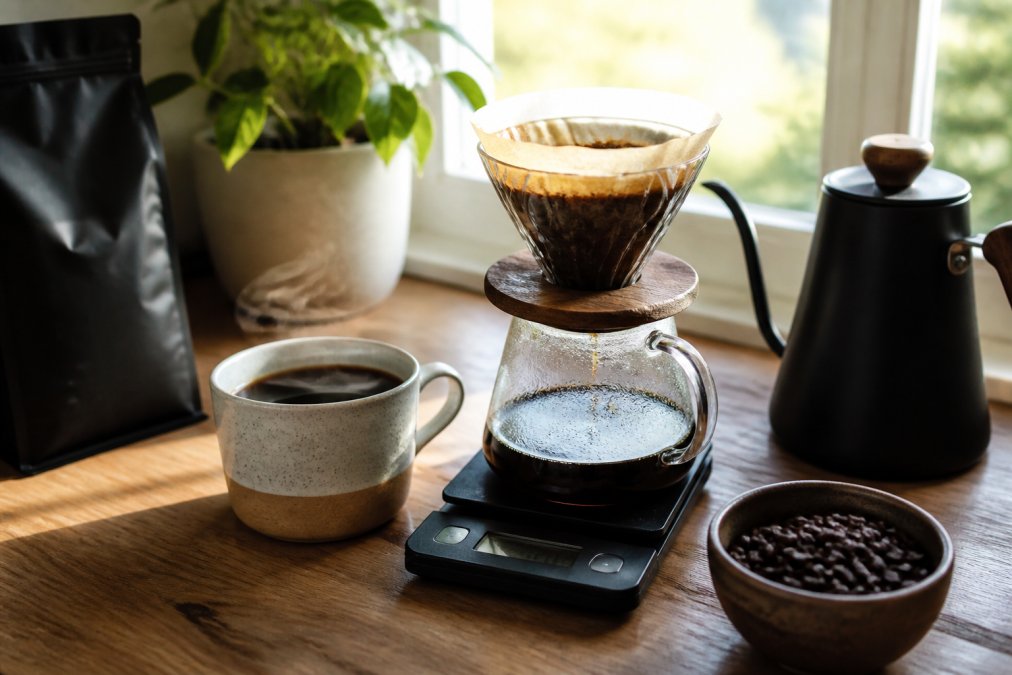
Start with this simple routine:
- Weigh your beans, roughly 1 gram of coffee to 16 grams of water
- Grind fresh, fine for espresso, medium for pour-over, coarse for French press
- Heat water to just off the boil, around 90 to 96°C
- Pour, wait, and taste before you adjust anything
How to Store Specialty Coffee Beans for Maximum Freshness
Store specialty coffee in an airtight, opaque container at room temperature, away from light, heat, and moisture. That's the whole method. The enemies of fresh beans are oxygen, light, heat, and humidity, and a pantry shelf beats a fridge door every time.
A few practical rules:
- Keep beans in the original bag's one-way valve or a sealed canister
- Buy in amounts you'll finish within a few weeks
- Skip the freezer unless you're storing a large reserve, and never refreeze
- Grind immediately before brewing
Cost-Per-Cup Analysis: Is a Specialty Coffee Subscription Worth It?
A specialty coffee subscription usually costs more per bag than supermarket coffee, but the per-cup math often tells a different story. Most guides skip this calculation entirely, they quote a bag price and move on. Here's how to actually run the numbers yourself, because the answer depends on how you brew and how much you drink.
The Formula
Cost per cup = (bag price ÷ grams per bag) × grams per cup
A Side-by-Side Comparison
| Source | Typical Bag Size | Cups per Bag | Notes |
|---|---|---|---|
| Supermarket pre-ground | 12 oz | ~17 | Often months past roast date |
| Specialty subscription (12 oz) | 12 oz | ~17 | Shipped within days of roast |
| Specialty subscription (2 lb) | 32 oz | ~45 | Lower cost per cup, larger upfront spend |
| Café drip cup | 12-16 oz | 1 | Highest per-cup cost by far |
| Café latte | 12 oz | 1 | Highest per-cup cost, plus milk and labor |
What the Math Actually Shows
The gap between supermarket and specialty coffee per cup is real, but it's smaller than the sticker price suggests, and it shrinks further when you buy larger bags or split a subscription with a household member. The bigger variable is what you're comparing against. A daily café habit costs far more per cup than any home-brewed subscription, even a premium one.
The Hidden Costs Beginners Forget
- Grinder: a decent burr grinder is a one-time cost that pays off across every bag you brew. Blade grinders produce uneven particles and waste the quality you're paying for.
- Scale: a $15-$25 kitchen scale is the single cheapest upgrade to consistency. Eyeballing scoops wastes beans.
- Water and filters: negligible per cup, but worth counting if you use bottled water.
- Spoilage: if you can't finish a bag within 3-4 weeks, you're paying for coffee you're pouring out. Match your delivery frequency to your actual consumption, this is where a flexible subscription earns its keep.
When a Subscription Isn't Worth It
Pricing for any specific plan depends on quantity, origin, and delivery frequency, so check Dyverse's site for current rates rather than trusting a number from a blog. The real value isn't just the beans, it's the tasting experience and the education that comes with each delivery.
Equipment Pairing Guide: Match Your Subscription to Your Brewing Method
The right subscription depends on how you actually brew, not on what sounds impressive. Match the brewing method to the beans and you'll get better results from day one.
- Drip machine: choose medium roasts and pre-set grind, prioritize blends for consistency
- Pour-over: light to medium roasts, medium grind, single-origins shine here
- French press: medium to dark roasts, coarse grind, blends for body
- Espresso: medium to dark roasts, fine grind, blends built for milk drinks
Conclusion: Start Your Specialty Coffee Subscription with Confidence
Choosing your first subscription is really about matching flexibility, freshness, and education to how you brew. Get those three right and the rest follows.
Frequently Asked Questions
What is the best monthly coffee subscription for someone new to specialty coffee?
The best specialty coffee subscription for beginners offers flexibility, clear tasting notes, and freshly roasted whole beans. Look for a service that lets you choose roast profiles, skip months, and receive coffee within days of roasting. A beginner-friendly subscription should also provide brewing guidance and a range of single-origin and blend options so you can explore without committing to large bags.
Is a coffee subscription worth it compared to buying bags at the store?
A specialty coffee subscription often delivers fresher beans because roasters ship within days of roasting, while store shelves can hold bags for weeks or months. For beginners, the curated selection and tasting notes help you learn what you like. The cost per cup depends on the plan and your brewing method, but many subscribers find the freshness and variety justify the price over time.
How often should I receive a coffee subscription delivery?
For a single home brewer drinking one or two cups a day, a delivery every two to four weeks keeps beans fresh without overwhelming your cabinet. If you brew less often, choose a monthly or bi-monthly plan. Many subscriptions let you pause or skip deliveries, so you can adjust as your consumption changes. Start with a smaller bag and shorter interval, then scale up.
What if I don't like the coffee I receive?
Reputable specialty coffee subscriptions offer satisfaction guarantees or let you swap upcoming selections. Before subscribing, check the cancellation and return policy. Some services also provide tasting notes and brewing tips to help you get the most out of each bag. If a particular roast isn't to your taste, you can often adjust your preferences for future deliveries.